
INTERVIEW ON THE PRICE OF BUSINESS SHOW, MEDIA PARTNER OF THIS SITE.
Recently Kevin Price, Host of the nationally syndicated Price of Business Show, interviewed Michael Marino.

The Michael Marino Commentaries
The Commercialization and Financial Expansion of College Sports
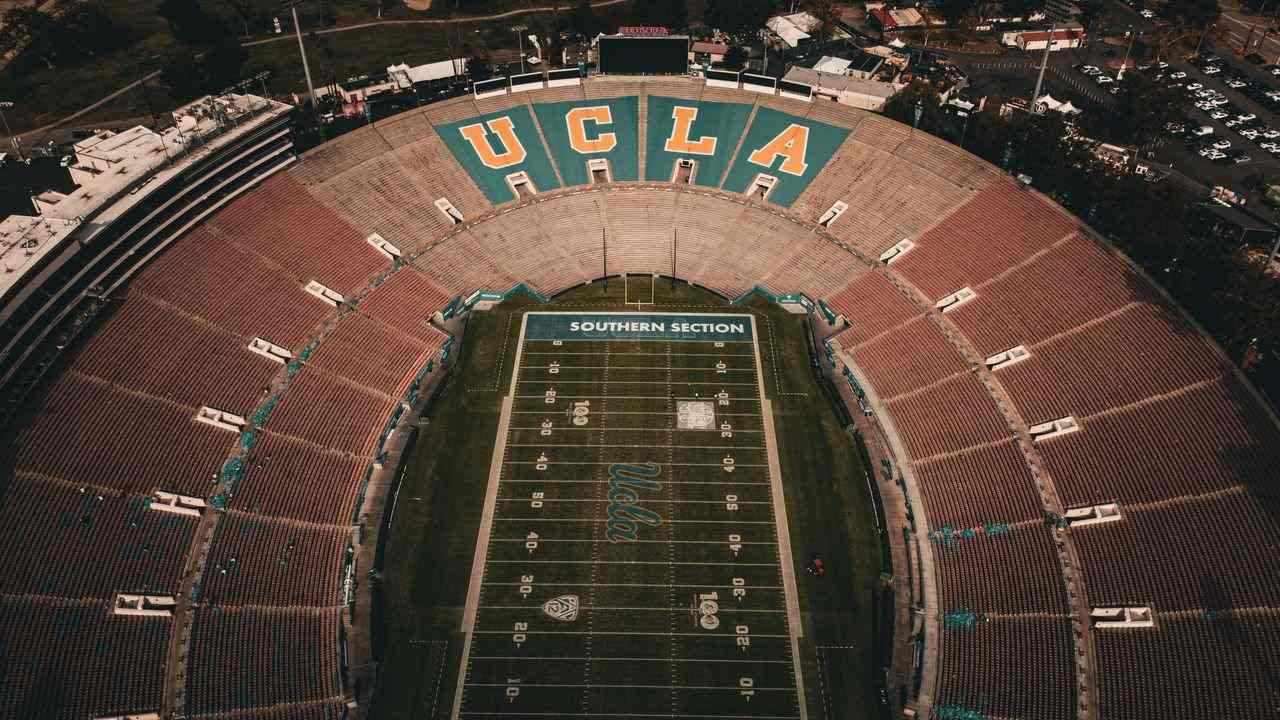
Over the past few decades, college sports have transitioned from localized community events into high-stakes, multi-billion-dollar commercial enterprises. While advertising revenue has long been a part of the collegiate sports landscape, the sheer scale of the financial input today is staggering.
The Power of Television and Broadcasting Rights: The game of football transformed the industry, serving as the premier product for television. The explosion of broadcasting and streaming rights turned hundreds of thousands of dollars in revenue into billions.
Massive Program Budgets: Major name programs now operate with athletic budgets exceeding fifty million dollars specifically for football, creating a financial disparity that is increasingly difficult to sustain.
Conference Championships and Playoff Expansion: The expansion of postseason systems—such as shifting from traditional formats to expanded 24-team playoffs and multi-team championships—has dramatically altered scheduling and financial stakes.
The introduction of Name, Image, and Likeness (NIL) rules has fundamentally altered the relationship between universities, athletes, and money. What was once an amateur model built on strict institutional loyalty has evolved into an environment heavily influenced by financial compensation.
The Death of the Old Guardrails: Previously, any direct transfer of money from a school to an athlete violated fundamental rules of trust. However, the legal and judicial pressures surrounding NIL have completely inverted this dynamic.
The “Gold Rush” Effect: Marino and Price noted that current practices resemble a modern-day gold rush, where programs struggle to match escalating budgets, leading to an environment where top talent flows toward financial opportunities.
Impact on Non-Revenue Sports: While football and men’s basketball capture the vast majority of revenue and attention, non-revenue and Olympic sports face mounting pressure as schools scramble to fund their primary athletic programs.
The legal framework surrounding collegiate athletics is currently undergoing intense scrutiny, with significant debate over whether student-athletes should be classified as employees.
The Employment Misnomer: While some legal advocates push for employee classification to secure rights and benefits, comparisons to models like shared-ride drivers highlight the complex legal nomenclature involved.
Proactive Institutional Models: Programs like the University of Tennessee have begun exploring model collective bargaining agreements for sports like men’s basketball, anticipating future regulatory shifts.
Legislative Stalemates: Efforts to pass federal legislation, such as the Protect All Student-Athletes Act, have faced bipartisan friction and congressional hurdles, leaving the legal landscape fractured across different states.
The transformation of college athletics represents a massive cultural, economic, and legal shift. While these changes offer unprecedented financial opportunities for top athletes, they also threaten the traditional community-driven spirit of collegiate sports. As legal battles, NIL collectives, and conference realignments continue to evolve, experts like Michael Moreno emphasize the critical need for sustainable frameworks to balance commercial success with the foundational integrity of higher education.
Furthermore, the conversation touched upon the long-term sustainability of these financial trajectories across the entire collegiate athletic department. As athletic budgets soar past historical boundaries, smaller programs and non-revenue sports find themselves struggling to keep pace, raising questions about equity and access in higher education. Moreno emphasized that without comprehensive federal oversight or a unified governance framework, the ongoing legal battles and shifting paradigms will continue to disrupt the traditional collegiate model, ultimately forcing universities to fundamentally redefine their relationship with student-athletes in the years ahead.
Michael Marino is a NYC-based management labor, employment and entertainment lawyer who for decades has represented corporations, executives, celebrities, sports figures, and influencers. A member of the College of Labor and Employment Lawyers, he has tried federal court cases across the country and negotiated hundreds of collective bargaining and marketing agreements. Before entering private practice, he served proudly as an officer in the United States Marine Corps, and as Special Counsel to the Secretary of the Navy. He is a graduate of Georgetown University Law Center, Syracuse University College of Law, and Cornell University’s School of Industrial and Labor Relations.
Learn more at https://www.seyfarth.com/people/michael-f-marino.html/.
Connect with Michael on social media:
LinkedIn: https://www.linkedin.com/in/michaelfmarino
Twitter/X: https://x.com/seyfarthshawLLP
Check out more national news stories here.
Explore more insights at https://usabusinessradio.com/.